


 While I must admit that I'm no longer at the hill at 7:15 AM waiting for the lifts to open at 8:00, I'm always excited about being on the snow, I love snowboarding for its rhythm and its process of using the entire slope and the woods. I've been skiing since the age of 5, shifting to riding at 50 and have never had a bad day of being on the hill.
What I've also discovered over decades of New England winters and especially this one, is that I also really love the rhythm and the process of shoveling snow especially with my snowblower.
There's a particular kind of satisfaction that comes at 6:30 on a Vermont or NH winter morning, standing at the top of my driveway with my snowblower humming and looking out at inches of fresh snow and thinking through how I'm going to attack the snow given its depth, wind and consistency, and then quickly figuring out: "I've got a plan for this".
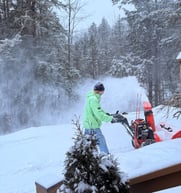 Most people see snow removal as a chore. Not me: First, I like the solitude...even given the noise of the Ariens.
I also love both the science and the Zen of snow blowing as my personal masterclass in process, the exactness of the timing plus the metrics of forecasting when I'll need to clean the driveway again. Not surprisingly those are the exact same disciplines that I see in my "A'" and "A+" level salespeople and especially in their managers.
Reading the Conditions Before You Move an Inch
The first mistake an amateur makes with a snowblower is firing it up and just charging forward. The professional pauses. You first need to discover and figure out what you're dealing with.
-
How deep is it? Depth determines your pass width and your engine load. Six inches of fluffy powder is a completely different problem from six inches of dense, wet, snow like we had last week that packs like concrete. Get this wrong and you'll jam the auger within the first fifty feet. I'm pretty good at this but also managed to go through 2 sets of sheer pins not realizing that the stone wall had toppled over.
-
What's the water content? Light, dry snow from a cold-air storm throws beautifully and 10 feet. Heavy, wet snow from a warm front is another animal entirely: it clumps, it clogs, it requires slower passes and more deliberate technique. The same volume of snow can take twice as long depending on density.
- What's the wind doing? This is the variable most people ignore, and it's the one that will undo all your work if you're not paying attention. Blow directly into the 55-mph wind like we had last week and you'll be wearing everything you just cleared. You have to angle your chute, work with the wind direction and sequence your passes so the wind is always working for you and never against.
-
What time of day is it? If the town snowplow hasn't come down your road yet, don't clear to the edge of the street...and never get on the wrong side of the snowplow driver!
The discipline here is the same as it is in Sales. First "Qualify" and then go through a detailed "Discovery" taking in the full picture before any actual selling or even demoing begins. Rushing a demo, never works!
The Plan: Zones, Sequences, and Passes
A good snow removal plan starts with stages. The driveway is not one stage; it's a set of adjacent steps that have to be solved in the right order...exactly the same as in a funneled step-by-step sales process.
You start where you have the most room to throw. You work from the center out or from the far end back toward the garage, depending on where the snow has to go. My approach to the tight driveway at the NH beach is totally different to the tightly angled and purposefully pitched driveway in VT. I need to think three passes ahead because each pass affects the geometry of the next one and most importantly where the discarded snow is going to sit especially important in January and February. This is systems thinking. It's the same discipline that makes a sales leader think in terms of pipeline stages, not just racing ahead and getting boxed into a corner.
Great sales, like great snow removal, is a process, not an event!
The single biggest mistake I see in sales organizations at every company I've worked with over thirty years of consulting is that too many salespeople treat each deal as a unique, improvised adventure. They rely on personality, relationships, and luck. They skip the formality of the steps. They don't read the conditions. They don't listen to the wind and only hear what they want to hear.
Step One: Read Your Conditions-Qualify the opportunity!
Before you engage a prospect, you need a complete situational read. What is the depth of their problem? Is this a surface pain or something structural? What's the density: how urgent is it to them, and how much are they emotionally committed to solving it? What's the wind? Who in the organization is driving decisions, and which way are the political forces blowing?
Salespeople who skip this step find themselves blowing snow into the wind every single time. They present features to someone who hasn't acknowledged a problem. They pitch price to someone who hasn't committed to a solution. They close too early, or too late.
Step Two: Work the Right Zones in the Right Sequence!
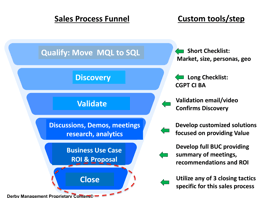 Every complex sale has stages: Qualify, Discovery, Validation, Discussions, Business Use Case, and Close. You simply cannot rush someone from Qualify to Close in one pass. You need to work each stage completely before moving to the next and you have to sequence your activities, so each one creates the right conditions for what follows.
In practical terms, this means Discovery is the most critical step in any sales process! It means validating pain before proposing solutions.
It means building consensus before asking for commitment. Skip a stage and you'll find yourself back at the beginning of the driveway, staring at a pile of snow you created by working out of sequence.
Step Three: Tools Matter and So Does Knowing How to Use Them!
I own a variety of shovels, ice choppers, roof rakes and a couple of Ariens'. I know exactly which one to use and when. Plus, I have a seasonal deal with the two high school brothers three houses down the road in NH for those times I'm not at home.
The best salespeople have a full toolkit and deploy the right instrument at exactly the right moment. Discovery Checklists, Business Use Cases, ROI Calculators, Email Templates, and Sales Playbooks all garaged perfectly in customized CRMs, which are not just reporting tools, but a navigation process instrument that tells you where you are in the process and with AI, what tool to pick up next.
Step Four: Forecasting Is Everything!
Here is where most sales organizations fall apart, and where the winter weather analogy is most honest.
When I'm clearing the driveway in a storm that hasn't stopped like the two we have had this February, I'm constantly forecasting: How much more is coming? Is the temperature dropping, which means it'll get lighter and easier, or rising, which means it'll get heavier and colder? Do I clear it all now or come back in three hours for a second pass?
Sales forecasting requires the same real-time recalibration. A deal at 75% confidence in the pipeline isn't there because someone typed a number; it's there because you've mapped the buying criteria, confirmed the budget, identified the decision maker, and established a timeline. It's there because you've read the depth, the density, and the wind.
The math of a sales forecast should be a product of process discipline, not optimism which is a condition brought about by "happy ears". Every deal in your pipeline should be able to answer three questions: What specific action has the prospect taken to advance this? What's the next agreed-upon step with a specific date? What's the condition that could cause it to stall?
If you can't answer those three questions, that deal doesn't belong at the percentage you've assigned it.
The Satisfaction of a Clean Run
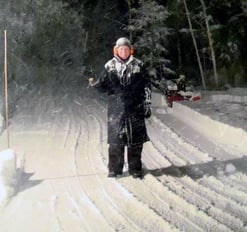 There's something deeply satisfying about finishing a well-executed driveway. The edges are clean, the snow is stacked where it should be, there are perfect rows left across the driveway, and you've accounted for the fact that it's still snowing lightly and you'll need to do one more pass at in six hours.
The same satisfaction is available in everything about sales, but only if you treat it as a process worth mastering and not just a chore to be done. Plan before you move. Read the conditions. Work the right zones in the right sequence. Use the right tools. And forecast based on facts, not feelings.
New England winters are unforgiving if you don't have a process to attack the snow! So are your quarterly numbers!
Have a great day selling today!
Jack Derby is the founder of the Derby Entrepreneurship Center at Tufts University and Managing Partner of Derby Management, a 30-year-old Boston-based management consulting firm specializing in business strategy and the science of sales and marketing. He teaches Sales and Marketing at Tufts and is the author of "The Marketing of Me" and a series of how-to guidebooks on "Writing the Winning Sales Plans" and "Writing the Winning Business Plans".
Now's THE Time to dive into your business planning for what lies ahead in 2026!
Think about taking a full day in early April to commit to updating your Sales Playbook for the balance of 2026. Just connect with me at jack@derbymanagement.com, and we can discuss a few ideas.
"Writing the Winning Sales Plan"
"Writing the Winning Business Plan"
www.derbymanagement.com
Derby Entrepreneurship Center at Tufts.


